Focused, one-on-one instruction that helps children strengthen practical skills for daily life
Dedicated ABA Therapy Session for Autism
All children learn in their own way. Some children need repetition, others respond best to visuals. Many children need time before they're ready to try something new.
One-on-one Applied Behavior Analysis (ABA) therapy gives your child the space and flexibility to develop skills according to their own pace, with instruction tailored to the way they learn best. With this option, a therapist works directly with your child and adjusts their approach immediately when needed.
Individualized Care for Ages 2 to 12
At Mindcolor Autism, we offer Applied Behavior Analysis services for children ages 2 to 12 (depending on location). A licensed clinician designs your child's treatment plan based on an assessment.
During each ABA therapy session for autism, your child practices skills one by one and step by step with their own dedicated therapist. This helps ensure that the professional teaching them knows their goals and learning style, and can adapt instruction immediately when needed.
A method for teaching skills in a clear, repeatable way
Applied Behavior Analysis, or ABA therapy, is an evidence-based approach we use in our programs.
Two Main Focus Areas
Teaching new skills
If your child is learning to ask for help, the therapist doesn't teach it once and move on. They model the request, practice it together, and gradually step back as your child begins doing it independently.
Reducing behaviors that interfere with learning or daily routines
We look at what your child is actually doing. Are they starting a task without prompts? Do they need fewer reminders? If something isn't working, we adjust how we teach it.
Skills your child may practice
Board Certified Behavior Analyst conducts an ABA evaluation for your child and creates the treatment plan.
Registered Behavior Technician works one-on-one with your child and tracks how they respond during practice.
Your child's plan changes as their skills grow. When your child begins using a skill with fewer prompts, we introduce the next goal. We explain what your child is working on and review progress with you regularly.
Skills your child can learn through ABA therapy
When your child works consistently with our therapists, small improvements become easier to notice. If a task feels too hard, the therapist adjusts it to be more manageable. If something clicks, they build on it right away.
Intellectual Functioning
Your child may practice following multi-step directions or finishing a task independently. They might work on sorting, matching, or simple problem-solving activities that strengthen attention and flexibility. As your child's focus improves, classroom expectations often feel less overwhelming.
Social Functioning
Some children need direct instruction in social situations. Your child may practice waiting for a turn, responding to a peer, or recognizing facial expressions. The therapist guides these interactions and gives immediate feedback. With repetition, social skills begin to carry over into school and community settings.
Language Development
Your child's communication plan starts with how they already try to express themselves. During sessions, the therapist pays close attention to what your child does independently and where they need more guidance. From there, your child practices expressing needs more clearly and responding during everyday interactions. That could mean expanding spoken language, learning how to use picture supports, or becoming more comfortable with a communication device. The goal is to help your child communicate in ways that make their daily life smoother and less frustrating.
Daily Living Skills
Independence develops through practice. Your child's therapist teaches daily routines in small parts and works through them repeatedly.
For instance, your child might work on:
- Washing hands
- Putting on a jacket
- Cleaning up after play
- Following a visual schedule
Over time, your child needs fewer reminders and begins completing more steps on their own.
What does an ABA therapy session look like at Mindcolor?
When your child arrives, they meet with their dedicated therapist who understands their goals.
Meeting with the same caring, friendly person each time builds familiarity, which in turn helps foster trust.
Sessions include skill practice, short activities, and play that reinforce communication and daily routines. Your child isn't sitting still the entire time. Much of the learning happens through interaction and movement.
If your child seems tired or frustrated, the therapist adjusts. They may simplify the task, introduce a brief movement break, or switch to a different activity that targets the same skill in another way.
Your child's responses guide the pace. When something works, we expand it. When something feels difficult, we slow down and provide more support.

Warm Welcome
Your child is greeted by name in a sensory-friendly space. Predictable routines help them settle in and understand what comes next. A calm start often makes the rest of the session smoother.

Play-Based Learning
Play is one way your child practices new skills. While your child builds, plays a game, or completes a hands-on activity, the therapist works on communication, turn-taking, and problem-solving.
This approach helps:
- Keep your child engaged
- Reinforce skills in a natural setting
- Increase willingness to participate
When learning is interactive, children are more likely to use the skill outside therapy.

Social Skills Development
When your child is ready, the therapist may introduce small peer activities. These are supervised and matched to your child's current abilities. Your child practices interacting with others in a safe, supportive setting where guidance is provided immediately and clearly.
Parent Connection
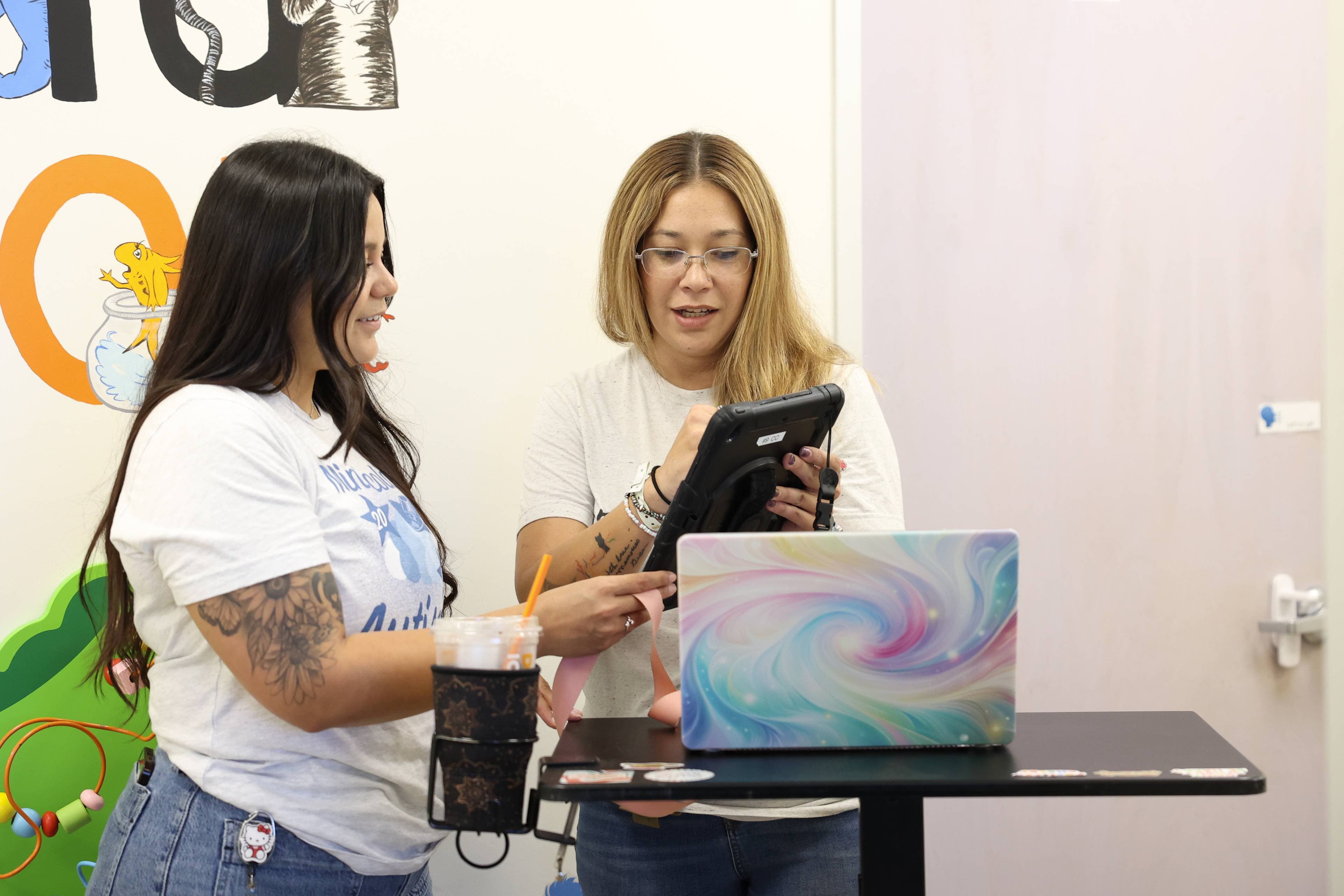
At the end of each session, you receive a summary of what your child practiced. The therapist explains what has improved and what still needs work. You may also receive suggestions for reinforcing a skill at home.
When your child practices in more than one setting, progress tends to be more consistent.
Clinical skill and compassionate, individualized care
Your child's program will be created by a licensed clinician who evaluates strengths, challenges, and developmental level. Treatment plans are based on assessment results, and progress is reviewed regularly.
Individualized Programming
No two children receive the same plan. Your child's goals reflect what will make the greatest difference in daily life. As your child grows, we adjust their instruction and objectives along with them.
Collaborative Care
Supervising clinicians and therapists communicate regularly about your child's performance. You receive updates and have opportunities to ask questions. Everyone involved understands the plan and expectations.
Whole-Child Focus
Your child's program includes communication, emotional regulation, daily routines, and social skills. We choose goals that support real-life situations at home, in school, and in the community.
Family Involvement
You are an essential part of the process. We explain strategies clearly so you understand how your child is learning. When you reinforce skills at home, your child gains more consistency and is more likely to continue practicing them.
Get started with ABA therapy at Mindcolor Autism.
Begin your journey with us. Together we can create a bright future for your child.
Getting started with ABA therapy at Mindcolor Autism
A step-by-step guide
Initial Contact
You complete the Get Started form. If we have availability, our Intake team will reach out and send the intake packet. If not, we will add your child to the waitlist and notify you as soon as a spot opens up.
We've Got This
Once your intake documents are in, we look at your insurance coverage and confirm your eligibility for services. Many plans are required to include ABA therapy benefits for children diagnosed with autism. We work with most commercial insurers, as well as Tricare and Medicaid in select areas.
Meet Your Team
You tour the center and meet the clinical staff. We explain how sessions work and discuss your child's needs. If it feels like the right fit, we schedule the assessment.
The Assessment
A licensed clinician observes your child, conducts skill assessments, and speaks with you about daily routines and concerns. Based on the results of the ABA evaluation, we create a treatment plan with clear learning targets. We review the plan together before therapy begins.
Welcome to Mindcolor Autism
Once insurance approval and scheduling are finalized, your child begins one-on-one ABA therapy.
Learn more about the intake process here, or contact us directly to get started.
Explore one-on-one ABA therapy for your child
If you'd like to learn more about one-on-one ABA therapy, reach out to our team. We're here to answer your questions and help you decide whether Mindcolor Autism is the right fit for your child.